 Avocado
Reading a nutrition label correctly is one of the most useful skills for anyone following a ketogenic diet, especially during the first few months before the carbohydrate content of packaged foods becomes familiar. Small reading errors repeated daily can add up and compromise ketosis without you realising it.

Total carbohydrates versus net carbohydrates
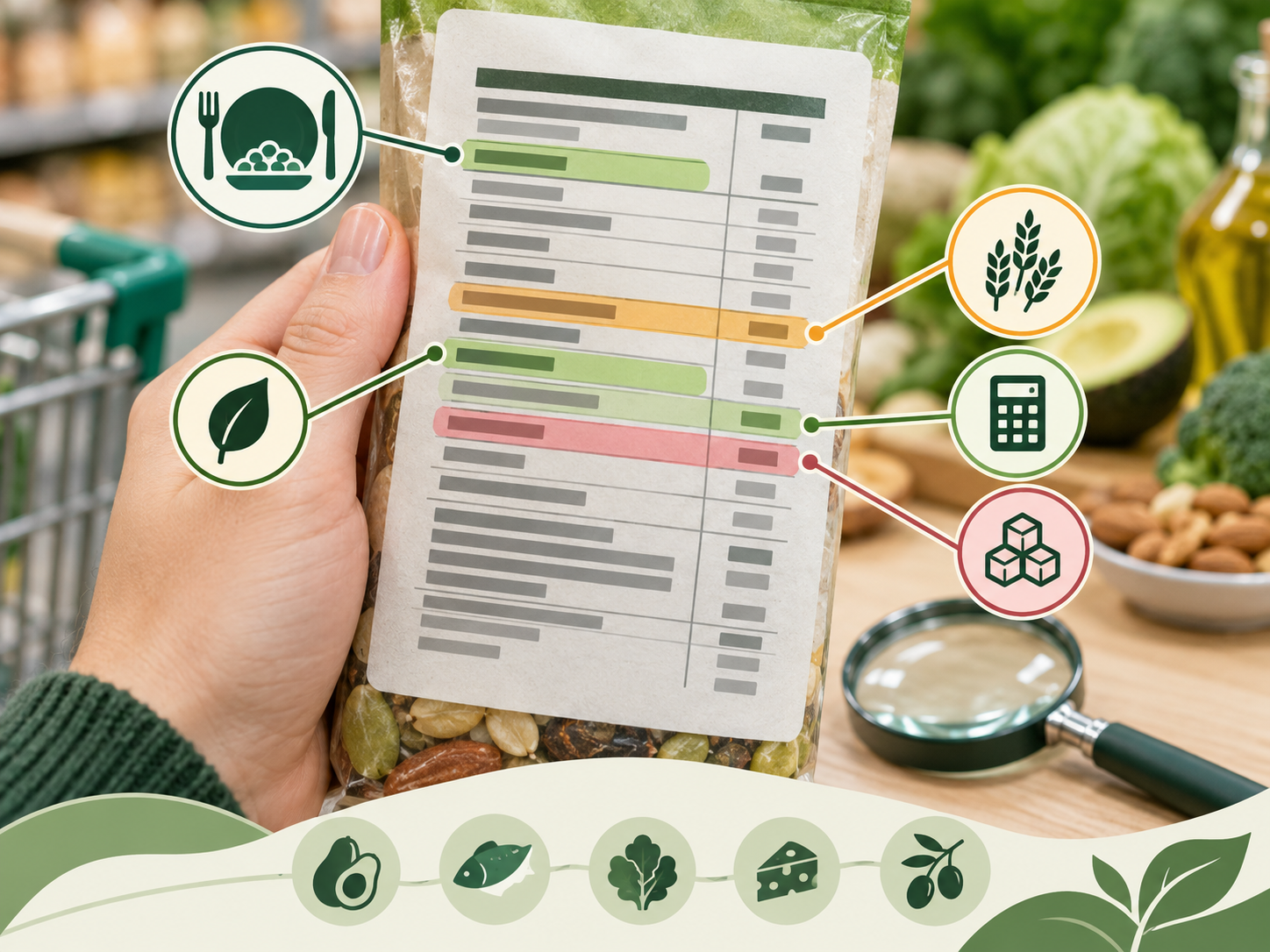
On European nutrition labels, the “carbohydrate” figure already excludes dietary fibre and includes sugars, starch and polyols. Do not subtract fibre again. The popular calculation “total carbohydrates minus fibre” applies to labelling systems in which fibre is included in total carbohydrates, rather than automatically to every label. Check which system the product uses, particularly with imported foods. Polyols should be considered separately because their metabolic effects vary; they are not all equivalent to fibre. See the definitions in Annex I of EU Regulation 1169/2011.
Watch sweeteners and polyols
Products marketed as “keto-friendly” often contain sweeteners such as erythritol, xylitol or maltitol, and some contain glucose-fructose syrup under less familiar names. Maltitol, in particular, has a meaningful effect on blood glucose despite often being treated as a “non-net” carbohydrate. Some people notice measurable effects on blood ketones after consuming it, unlike erythritol, which has a negligible glycaemic effect for most people. Reading the ingredients list, not just the nutrition table, is essential to identify the sweetener actually used.
Hidden carbohydrate-rich ingredients
Corn starch, maltodextrins, rice flour, dextrose and various syrups appear in products that may not obviously seem to contain them: ready-made sauces, sliced meats, salad dressings and flavoured protein supplements. Maltodextrins, in particular, often have a higher glycaemic index than table sugar despite a barely noticeable taste, making them easy to overlook if you rely only on visibly sugary foods or sweetness as an indicator.

How to read the ingredients list
Ingredients are listed by law in descending order of quantity. If a sugar or starch appears among the first three or four ingredients, the product is unlikely to fit easily into a ketogenic diet, regardless of its marketing. Be particularly cautious about claims such as “no added sugar”, which do not guarantee a low carbohydrate content when the product still contains starches or flour.
Declared portions and actual portions
An often overlooked point is the serving size to which the label's values refer. Some products give values per 100 g, others per serving, which is often smaller than the amount actually eaten. Always comparing values on the same basis, ideally per 100 g, helps prevent underestimating carbohydrate intake when eating a whole packet or a larger-than-declared portion.
With practice, reading labels becomes a quick task taking only a few seconds. During the first few weeks, however, it is worth spending extra time in the supermarket to build a personal list of verified packaged products that you can confidently buy again without rereading the label every time.


Related articles
Reference: EU Regulation 1169/2011, Annex I: definitions of carbohydrate and fibre.