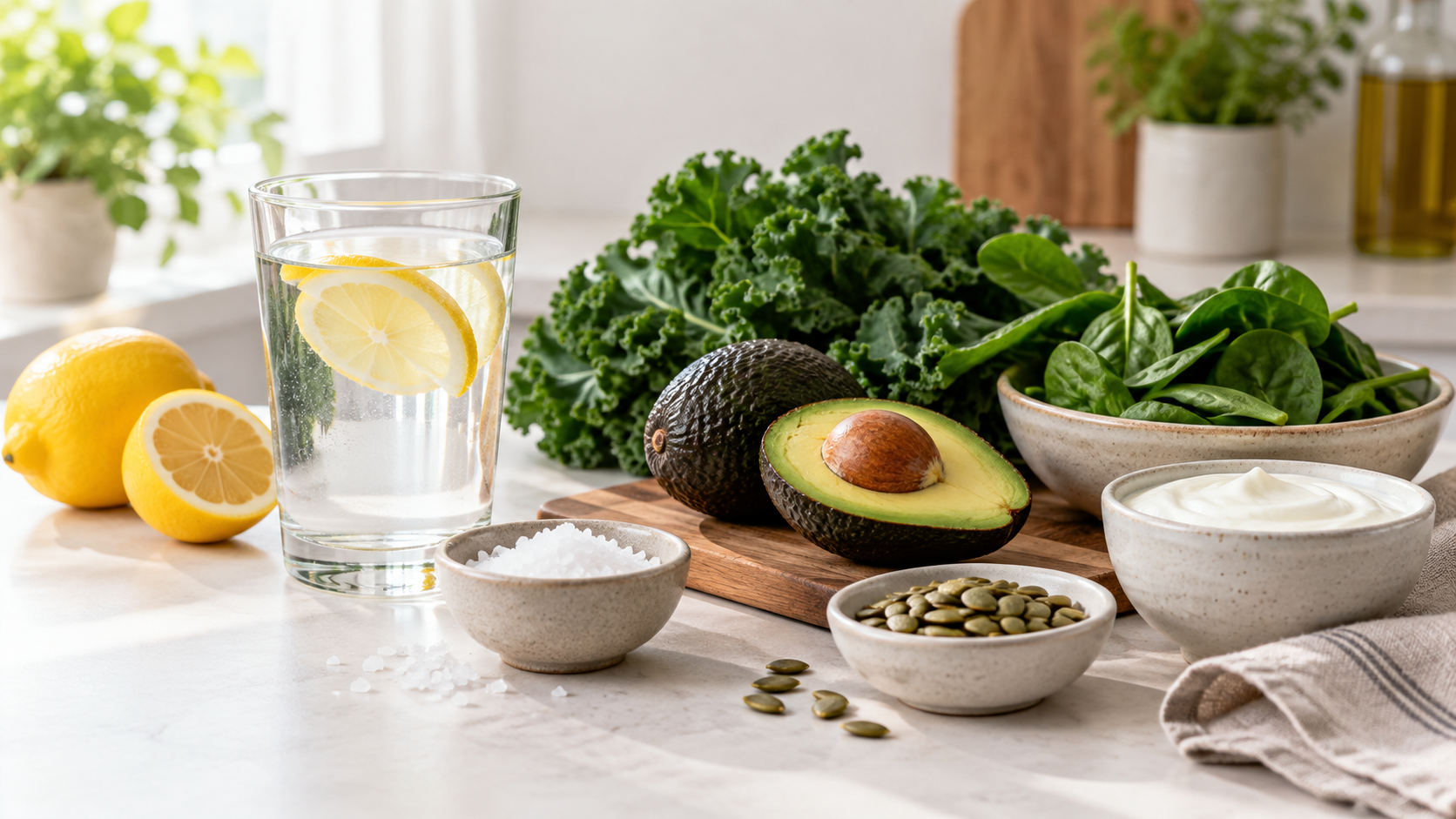
 Avocado
Breakfast is often the meal most dominated by ultra-processed products in a Western diet: sugary cereals, packaged pastries, industrial fruit juices and breakfast biscuits. Building a breakfast around whole foods requires a small reorganisation of habits, but not necessarily more preparation time.

Why a conventional breakfast can be problematic
Many packaged breakfast products are designed to be highly palatable and quickly absorbed. Sweetened puffed cereals, industrial jams and breakfast biscuits typically contain substantial amounts of added sugar and little fibre or protein, a combination that can produce a blood glucose spike followed by falling energy and mid-morning hunger, a familiar experience to people who have tried both kinds of breakfast.
Eggs: a versatile protein base
Eggs in any form — boiled, scrambled, poached or in a vegetable omelette — provide a protein-rich breakfast without refined carbohydrates. Several studies comparing high-protein breakfasts with refined-grain breakfasts document a longer-lasting feeling of fullness. Preparing a few boiled eggs in advance, as suggested in the article on snacks, makes a protein-rich breakfast possible even on rushed mornings.
Plain yoghurt with fresh fruit and seeds
Plain, unsweetened full-fat yoghurt topped with chopped seasonal fruit and a spoonful of seeds, such as chia, ground flaxseed or sunflower seeds, or nuts provides a balanced combination of protein, healthy fats, fibre and natural sugars within their original food matrix. This is very different from the industrial fruit yoghurts discussed elsewhere in this collection.
Whole-oat porridge
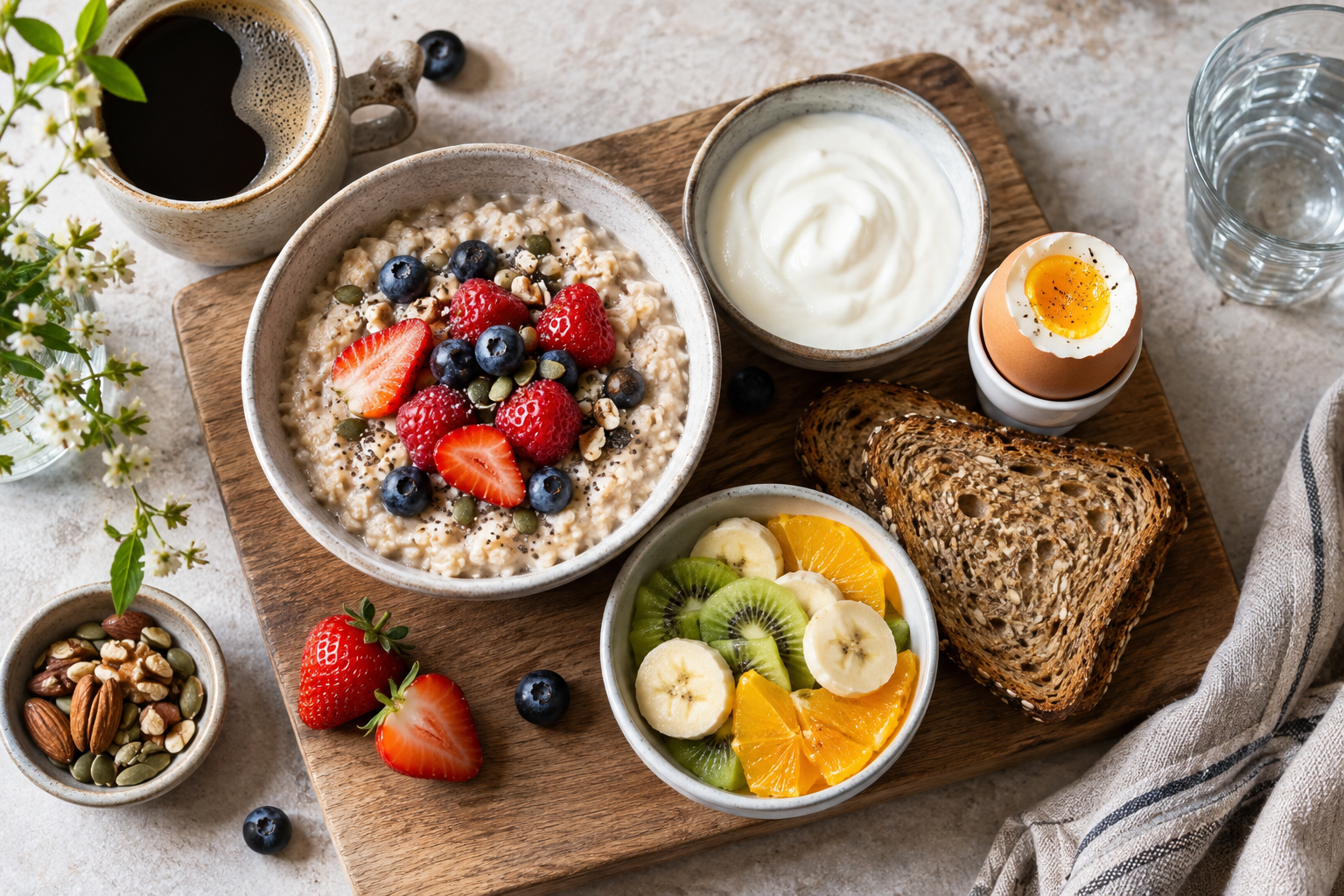
Whole rolled oats cooked with milk or a plant-based drink and topped with fresh fruit, cinnamon and nuts provide soluble fibre — particularly beta-glucans, associated with beneficial effects on cholesterol — complex carbohydrates that are absorbed more gradually and a good feeling of fullness. Distinguish whole oats from packaged, flavoured “instant porridges”, which are often high in added sugar despite their healthy image.
Wholegrain bread with protein-rich toppings
A slice of genuinely wholegrain bread, checked using the ingredients-list method discussed earlier, topped with mashed avocado, eggs, hummus or fresh cheese provides a complete breakfast combining complex carbohydrates, fibre, protein and healthy fats. This is considerably more balanced than the classic pairing of white bread and industrial jam.