 Avocado
The effect of the ketogenic diet on athletic performance depends heavily on the type of activity: it makes little difference for low-to-moderate intensity endurance sports, whereas it requires more careful consideration for high-intensity and strength-based sports.

Why the type of exertion matters
Low- and moderate-intensity activities (brisk walking, slow running, steady-state cycling) primarily utilize aerobic metabolism, which can effectively draw upon fats and ketone bodies for fuel. Conversely, high-intensity, short-duration efforts (sprinting, heavy weightlifting, team sports involving changes of pace) rely largely on muscle glycogen via anaerobic glycolysis—an energy system that ketosis cannot fully replace.

| Type of effort | Main energy system | Compatibility with ketosis | Practical note |
|---|---|---|---|
| Low-to-moderate intensity endurance | Aerobic: fats and ketones | Generally good after adaptation | Keep volume; monitor energy and recovery |
| Short high-intensity effort | Anaerobic: glycolysis and glycogen | Initial drop is possible | Temporarily reduce load; consider targeted carbohydrates |
| Strength and weights | Anaerobic + muscle glycogen | Variable | Adequate protein and recovery; a flexible variant may help |
| Prolonged endurance | Fat oxidation + glycogen | Possible benefit, mixed evidence | Test in training before races |
What happens during the first few weeks
During the transition phase (the initial 2–4 weeks, described in detail in the article on the "keto flu"), a temporary reduction in maximal strength and the ability to sustain high-intensity effort is common. Glycogen stores are depleted, and the body has not yet optimized fat utilization for fuel; this phase should be factored into training schedules by temporarily reducing volume or intensity rather than trying to force the same performance levels as before.

Keto-adaptation in athletes
After a few weeks, many endurance athletes report more efficient fat utilization during prolonged exertion, along with a reduced reliance on sugar intake during competition.
However, studies on performance remain mixed: some show benefits for long-duration endurance, while others find no significant differences compared to a high-carbohydrate diet; furthermore, for power sports, the literature tends to indicate an initial disadvantage that is not always fully overcome.

Intermediate strategies
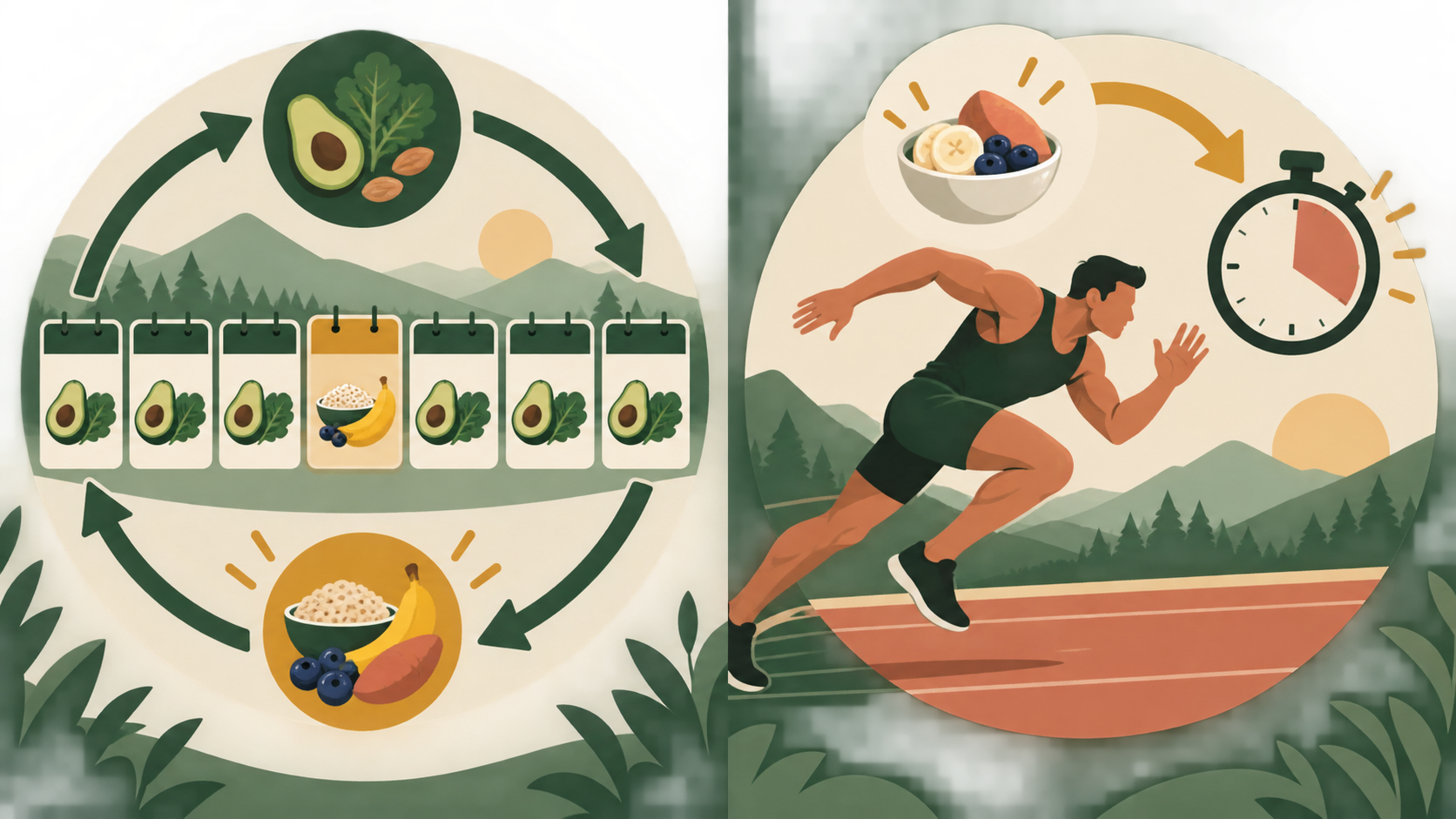
- For those engaged in high-intensity or strength sports, two variations are often more practical than a strict ketogenic diet:
- Cyclical ketogenic diet:days with very low carbohydrate intake alternating with 1–2 days of higher intake, typically timed around the week's most intense workouts.
- Targeted ketogenic diet:a small amount of fast-absorbing carbohydrates (20–30 g) consumed 30–60 minutes before the most intense workout to fuel the effort without exiting ketosis for the remainder of the day.
Protein and muscle recovery
For weight trainers, protein intake should be kept at the upper end of the recommended range (1.8–2.2 g per kg of lean body mass), as muscle protein synthesis does not change based on the dietary regimen followed but rather depends on amino acid availability and the training stimulus.

Electrolytes during physical activity
Individuals who train regularly while in ketosis lose more sodium through sweat compared to those on a high-carbohydrate diet, due to reduced water retention associated with lower glycogen levels. Increasing sodium intake on days of intense training—in addition to the measures already mentioned for managing the "keto flu"—reduces the risk of cramps and performance drops associated with dehydration.

Practical summary
Athletes engaging in moderate-intensity endurance sports can generally follow a standard ketogenic diet without major compromises, once the adaptation period is over. Those involved in strength or high-intensity sports often achieve better results with a cyclical or targeted approach, allowing them to benefit from ketosis for most of the week without sacrificing performance when it matters most.