 Avocado
A concrete example helps move from macronutrient theory (see the fourth article in this series) to real meals. The plan below is calibrated for an indicative 1,800 kcal, about 110 g of protein, 25–30 g of net carbohydrates and the remainder from fat: a starting point to adapt to your personal needs, not a universal template.

7-day menu
| Day | Breakfast | Lunch | Dinner |
|---|---|---|---|
| Monday | Scrambled eggs with avocado and spinach sautéed in butter | Chicken salad, extra-virgin olive oil, feta cheese and olives | Oven-baked salmon with broccoli dressed with oil |
| Tuesday | Full-fat Greek yogurt with almonds and chia seeds | Tuna bowl with hard-boiled eggs, mayonnaise and cucumbers | Sliced beef steak with sautéed mushrooms |
| Wednesday | Cheese and zucchini frittata | Smoked salmon, avocado and rocket salad | Chicken curry with cream and cauliflower |
| Thursday | Chia pudding with coconut milk and berries | Bunless beef burger with cheese and salad | Prawns sautéed with zucchini and garlic in extra-virgin olive oil |
| Friday | Soft-boiled eggs with grilled asparagus | Leftover chicken curry | Pork fillet with cauliflower purée |
| Saturday | Keto pancakes (almond flour) with butter | Caprese salad with plenty of extra-virgin olive oil | Sea bass baked in foil with mixed vegetables |
| Sunday | Omelette with cheese and bacon | Roast beef with mixed salad and extra-virgin olive oil | Broccoli and cheese soup |

Compatible snacks
Small portions of nuts (a handful), cheese, olives, celery sticks with almond butter or a hard-boiled egg. Limit industrially packaged "keto" snacks, which are often high in sweeteners that some people tolerate less well than the label suggests.

How to adapt the plan
- Different calorie needs:increase or reduce portions of fats (oil, butter, avocado) while keeping protein and carbohydrates stable, following the calculation method in the fourth article.
- Food preferences:each meal can be swapped for another of the same type from the permitted-food list (the third article in this series), as long as the overall macronutrient balance for the day is maintained.
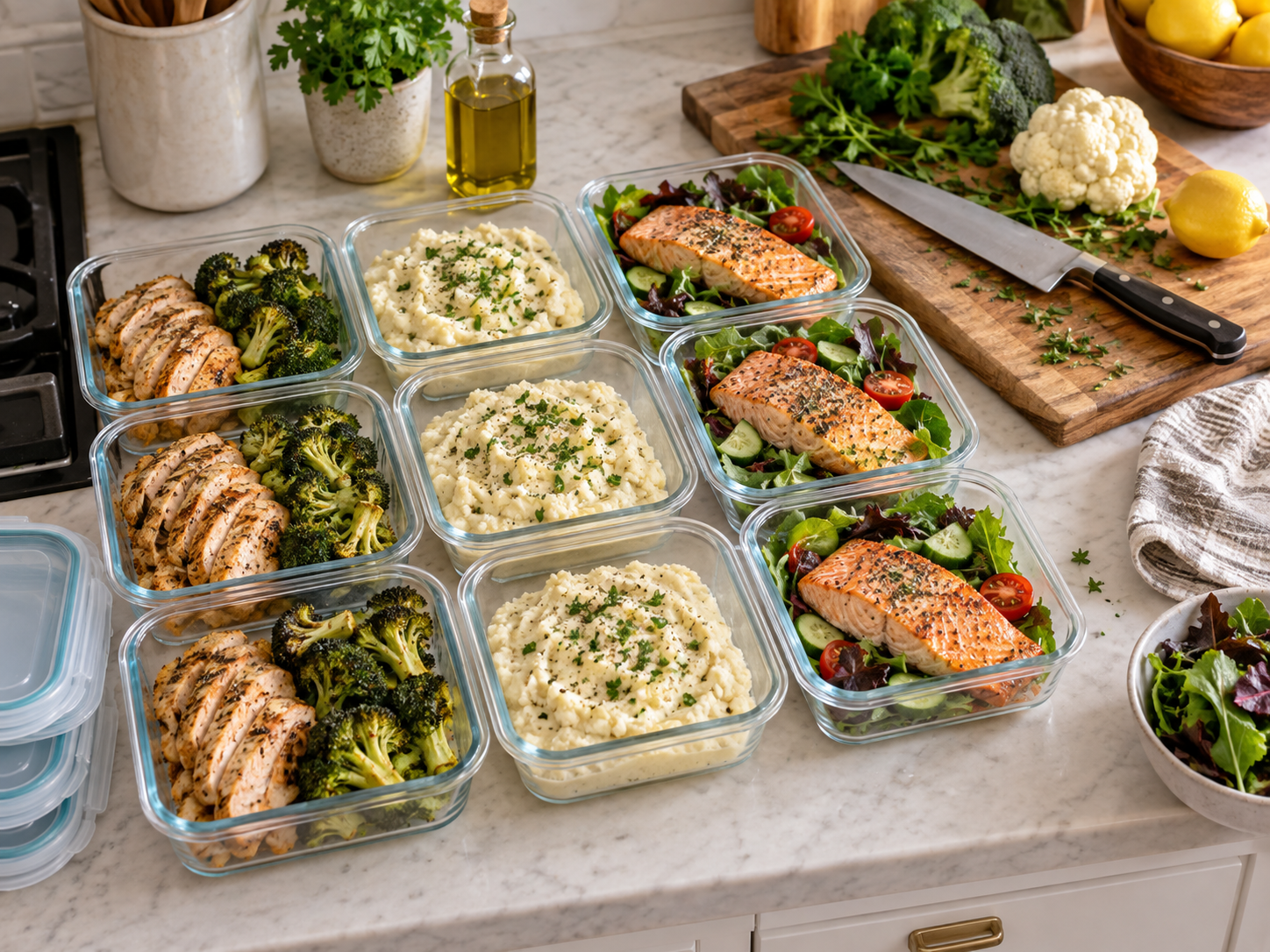
- Time budget:cooking double quantities of proteins and vegetables 2–3 times a week drastically reduces kitchen time on weekdays.
- Social life and restaurants:most kitchens offer at least one meat or fish option with non-starchy vegetables; asking to replace bread, pasta or potatoes with vegetables is almost always possible.

Basic shopping list
Eggs, meat (beef, chicken, pork), oily fish, assorted cheeses, cream, butter, extra-virgin olive oil, avocado, leafy greens, broccoli, cauliflower, zucchini, mushrooms, nuts and olives. This base covers most meals in the plan; vary the combinations throughout the week.
