 Avocado
Want to know whether you are in ketosis? You can measure ketones in blood, breath or urine. Each method looks at a different molecule and answers a slightly different question. Here is how to read the results without turning one measurement into a metabolic scorecard.

1. Blood: the most direct method
A finger-prick test measures beta-hydroxybutyrate (BHB), the main ketone circulating in the blood. It is the most direct way to check the blood level at that moment. It usually requires a meter and dedicated strips; always check compatibility, instructions and expiry dates. As a guide, 0.5–3.0 mmol/L is often described as the range for nutritional ketosis. It is not a diagnostic threshold or a target to chase. Strip cost is the main drawback. For comparable readings, measure under similar conditions and at a consistent time; there is no single best time for everyone.


2. Breath: useful for following trends
Breath devices estimate exhaled acetone. They are reusable and need no strips, but their reading is not the same as BHB, and the relationship is not precise enough to treat it as a blood measurement. Hydration, alcohol, oral hygiene and blowing technique can affect results. They are more useful for following your own trend over time than for obtaining a precise number to compare with another device.

3. Urine: most useful at the beginning
Urine strips detect acetoacetate excreted in urine. They are inexpensive and can be practical at the start, but readings vary with urine concentration: diluted urine may produce a lighter result. As you adapt to the diet, your body may use ketones more efficiently and excrete less; a negative strip alone therefore does not prove that you are out of ketosis.
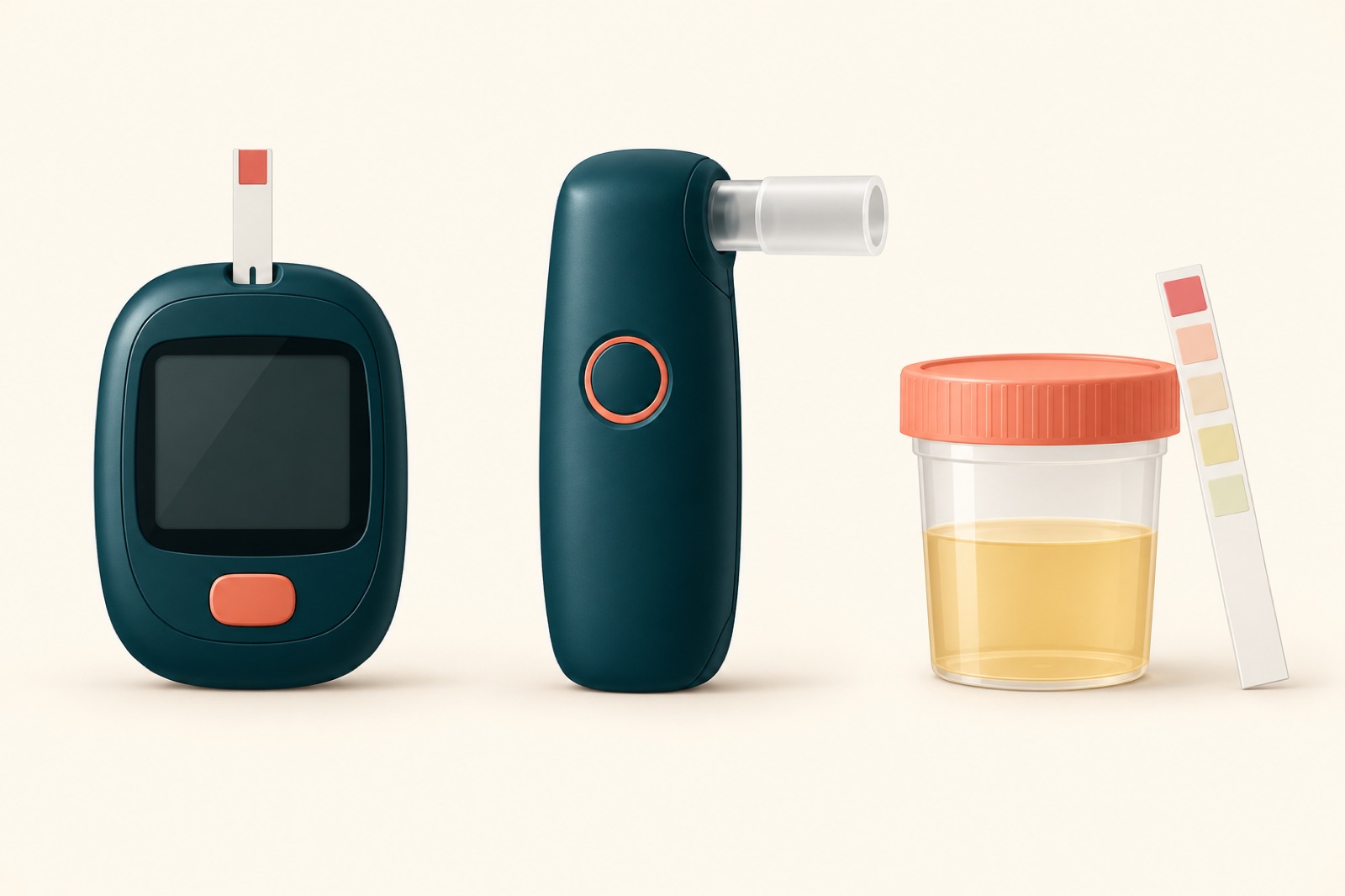

Which method should you choose?
For the most direct reading of circulating ketones, choose blood. If you want frequent tracking without buying strips, breath testing can be convenient, with lower precision. Urine strips may help at first but become less informative over time. Whichever method you choose, compare your own readings taken under similar conditions: the three methods are not interchangeable.
An important safety note
Nutritional ketosis is not the same as diabetic ketoacidosis. If you have type 1 diabetes, a history of ketoacidosis or take an SGLT2 inhibitor, agree with your clinician whether and how to check ketones, especially during illness or if you have nausea, vomiting or abdominal pain. With SGLT2 inhibitors, ketoacidosis can occur without very high blood glucose. Do not use the nutritional ketosis range to rule out a medical problem.

Further reading
For ketone testing in diabetes and the limitations of urine tests, see guidance from the American Diabetes Association and laboratory recommendations for diabetes care. American Diabetes Association: Managing Ketones with Diabetes; Laboratory recommendations for diabetes care.