 Avocado
The difference between a whole grain and a refined grain goes beyond the colour of bread or pasta. It concerns the structure of the grain itself and has measurable effects on the body's metabolic response, not just the fibre content shown on the label.
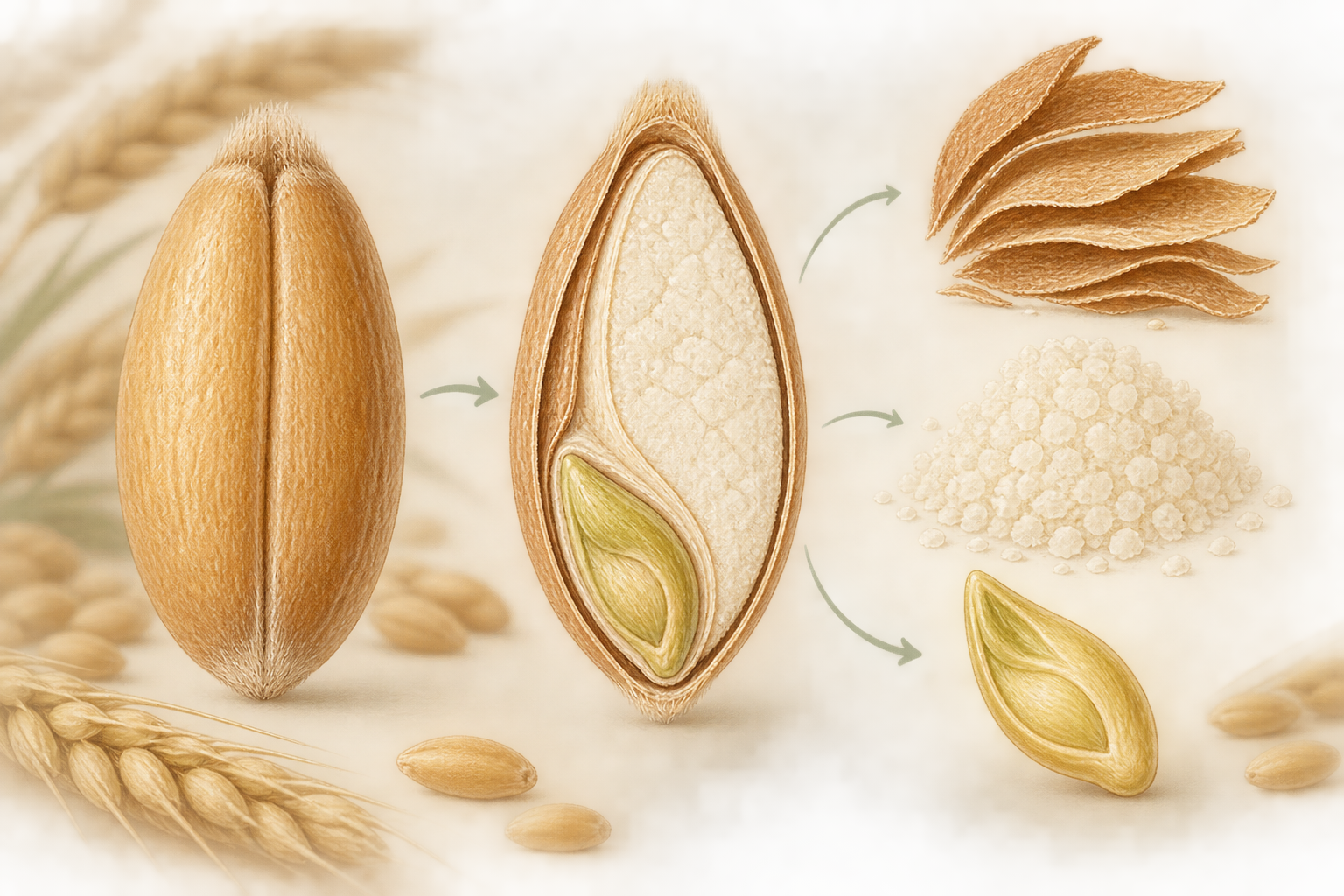
The structure of a grain
A whole grain has three parts: the outer bran, rich in fibre and minerals; the germ, containing B vitamins, vitamin E and unsaturated fats; and the endosperm, the innermost part, consisting mainly of starch and a small amount of protein. Refining removes the bran and germ, leaving only the endosperm. The result is a finer flour with a longer shelf life, but without most of the fibre, vitamins, minerals and bioactive compounds originally present in the grain.

From grain to table
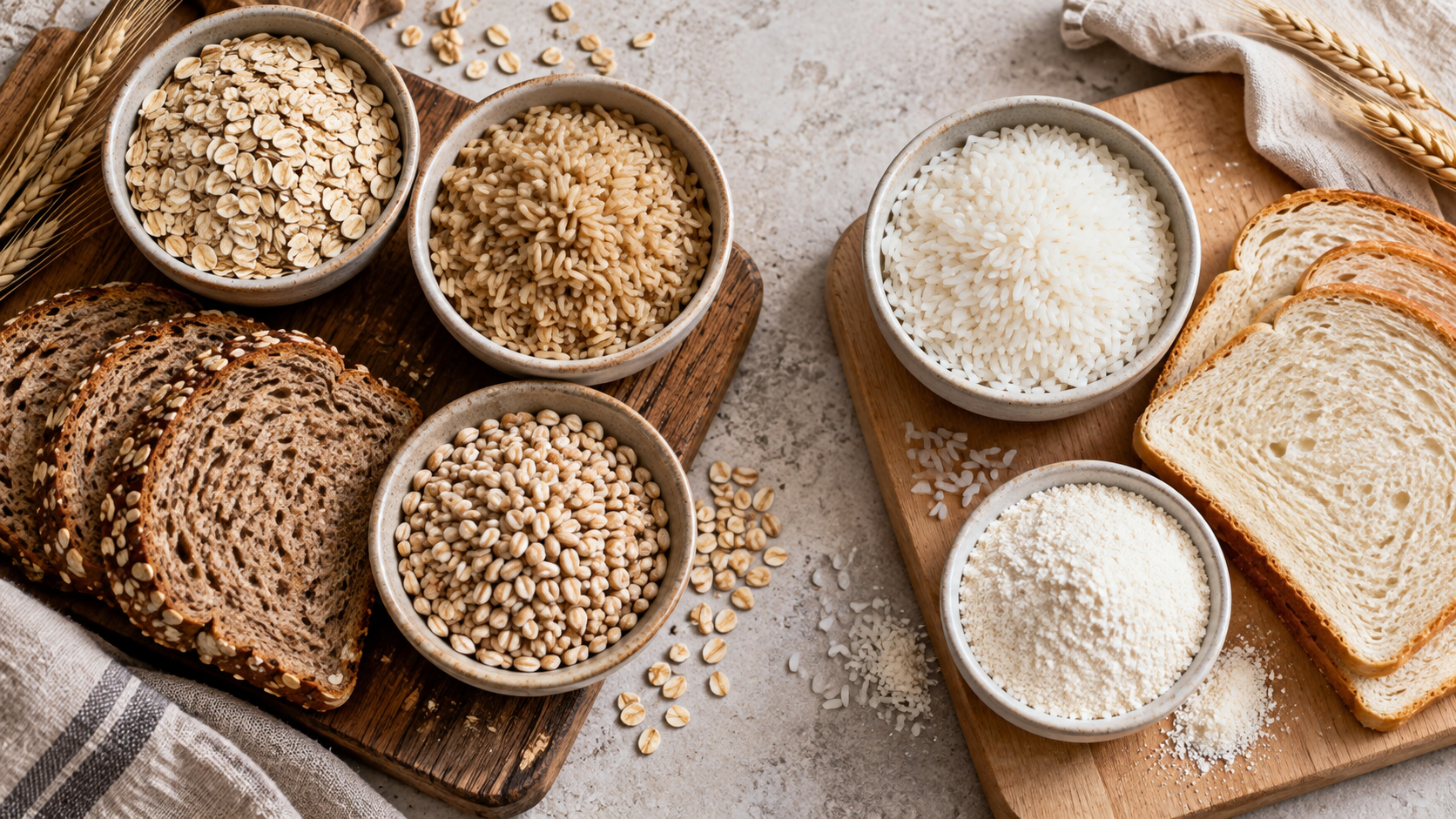
Choosing whole grains does not mean sacrificing convenience. Barley, brown rice and other grains can be cooked in advance and stored to assemble quick meals.

The impact on blood glucose response
The absence of fibre and simpler physical structure of refined grains mean that starch is digested and absorbed more quickly, producing a sharper, faster rise in blood glucose than the corresponding whole grain. This effect can be measured even when total carbohydrate intake is the same. A serving of wholewheat pasta and one of refined pasta containing the same amount of carbohydrate typically produce different blood glucose responses in most people, with the whole-grain version generally more favourable.
Making balanced choices
A gradual approach is often most useful. Introduce wholegrain bread, pasta and rice alongside your existing habits, read labels and prioritise less refined foods whenever possible.